Defend every claim. Document every handover.
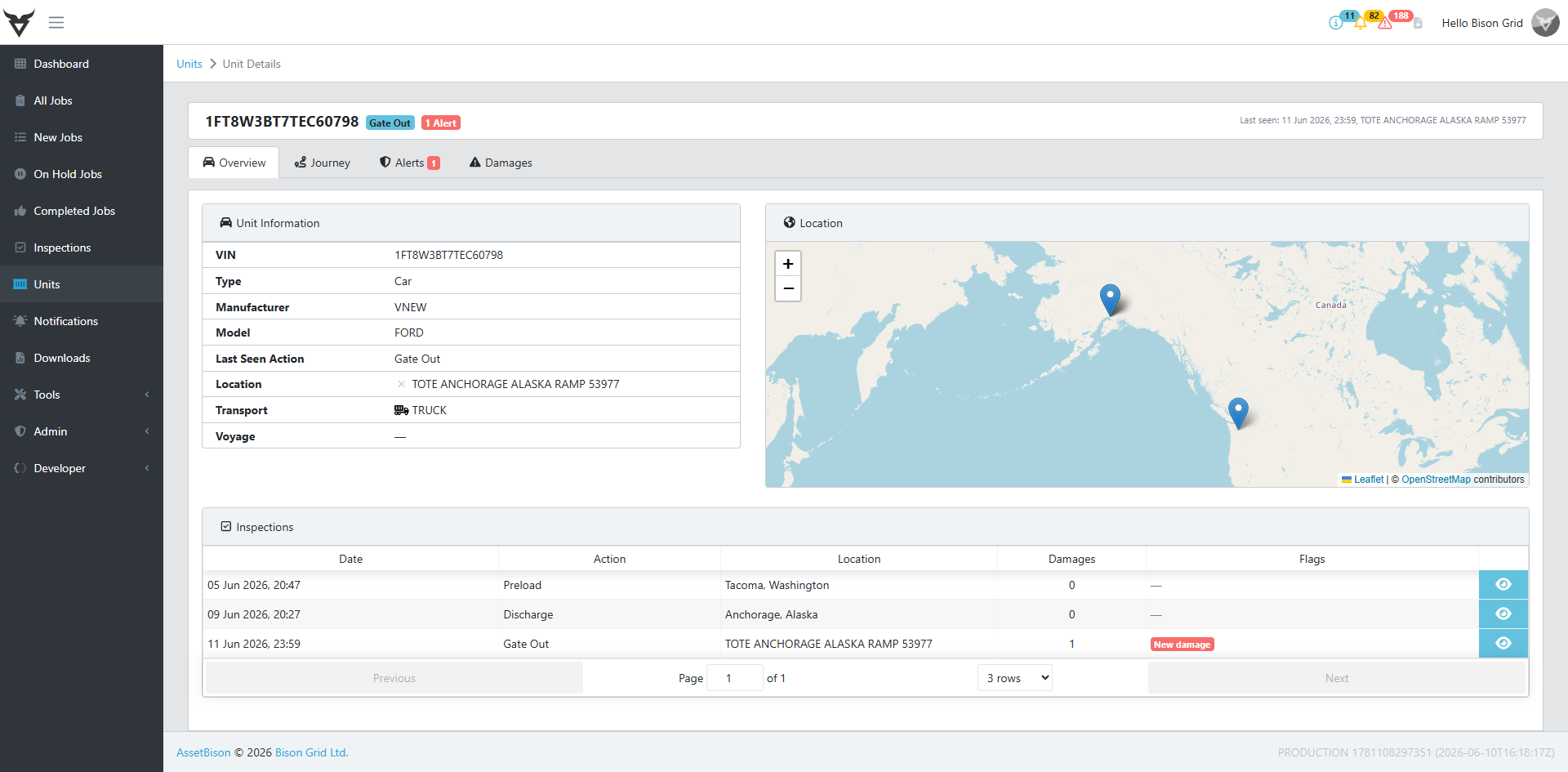
Bison Grid is the maritime quality and claims management platform for finished vehicle logistics — the system of record for vehicle condition across multi-handover chains. Built for claims and quality teams at PCTC operators, surveyors, and terminal operators. Bad VINs never reach your partners — every handover documented, every claim defensible.
WHY VEHICLE LOGISTICS OPERATORS
CHOOSE BISON GRID
Purpose-built for the two outcomes that matter most: defending claims and accelerating inspections.
Defend Every Damage Claim
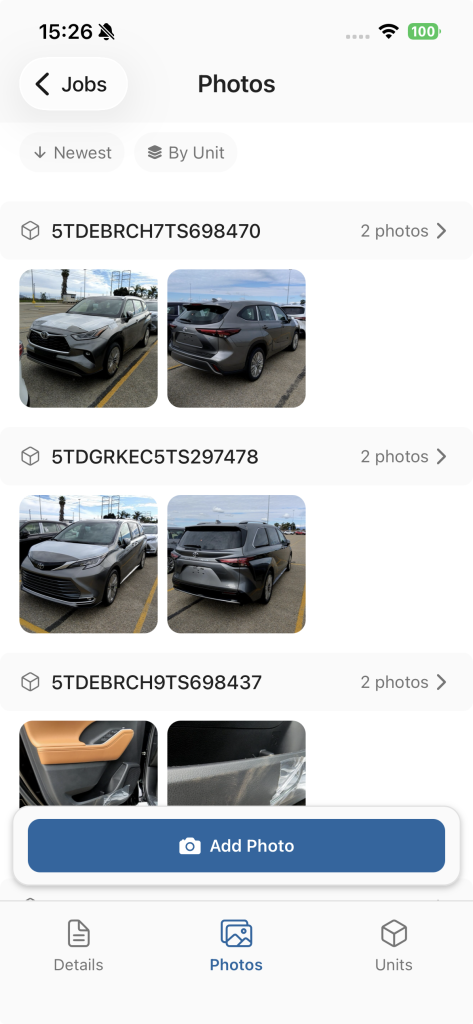
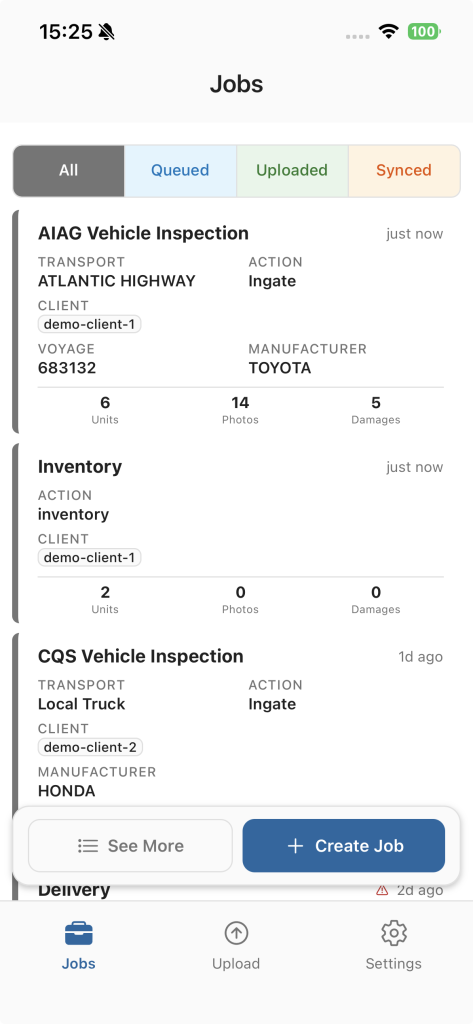
Timestamped, GPS-tagged photo evidence with digital signatures that resolves disputes before they become claims. Every handover documented. Every liability clear.
Process Vehicles in Minutes
Express Mode, barcode scanning, and Job Cloning built for high-volume environments. Your inspectors spend less time on data entry and more time clearing vehicles.
ePOD That Triggers Faster Invoicing
Digital ePOD with GPS-stamped delivery confirmation means invoicing starts the moment a handover is confirmed — no paperwork delay, no end-of-week batch processing.
VEHICLE INSPECTION SOFTWARE FOR EVERY TRANSPORT MODE
SHIP
The quality-management and OEM EDI booking platform PCTC and Ro-Ro shipping operators run.
TRUCK
The inspection and ePOD software lorry and road transport operators run in the field.
RAIL
Vehicle condition documentation and delivery tracking that rail freight operators run.
PORT
Terminal inspection, VIN tracking, and compliance reporting that port operators run.
Trusted by leading PCTC operators and vehicle logistics providers worldwide


THE BISON GRID PLATFORM
A platform built for finished vehicle logistics. Start with core inspection and ePOD, and add capability as your operation scales.
Bison Grid
Mobile inspection, ePOD, damage documentation, VIN tracking, and claims management. Bison Inspect entry tier from $195/month with full offline capability.
View Bison GridBison App
The iOS and Android mobile companion for field inspectors. Offline-first with 30-day auto-recovery, Zebra scanner support, and Express Mode.
View Bison AppBison Connect
API, EDI, and TOS/ERP integrations for enterprise vehicle logistics. Pre-built connectors for Navis, Tideworks, and SAP. From $475/connection per month.
View Bison ConnectWhat Our Clients Say
TRUSTED BY OPERATORS WHO MOVE MILLIONS OF VEHICLES
The Bison app gives us more accurate data collection and the ability to capture more photographic evidence in the same amount of time. The flexibility to handle different types of inspections and ID formats beyond standard 17-digit VINs has been important for our operations, and the management software has streamlined the reporting process for our admin team.
The app is easy to use and the management software provides comprehensive reporting. Our survey partners across multiple countries quickly became operational — multi-language support and offline capability made global deployment straightforward.
The app makes it easy for our drivers to capture real-time delivery signatures at various customer locations and dealerships while reporting all of the inspection and delivery data back to the vehicle manufacturers via EDI. With Bison’s support we have centralised all our inspections and claims data into one easy to use dashboard. It’s been a considerable improvement and reduced an immense amount of paperwork for us
Industry Insights