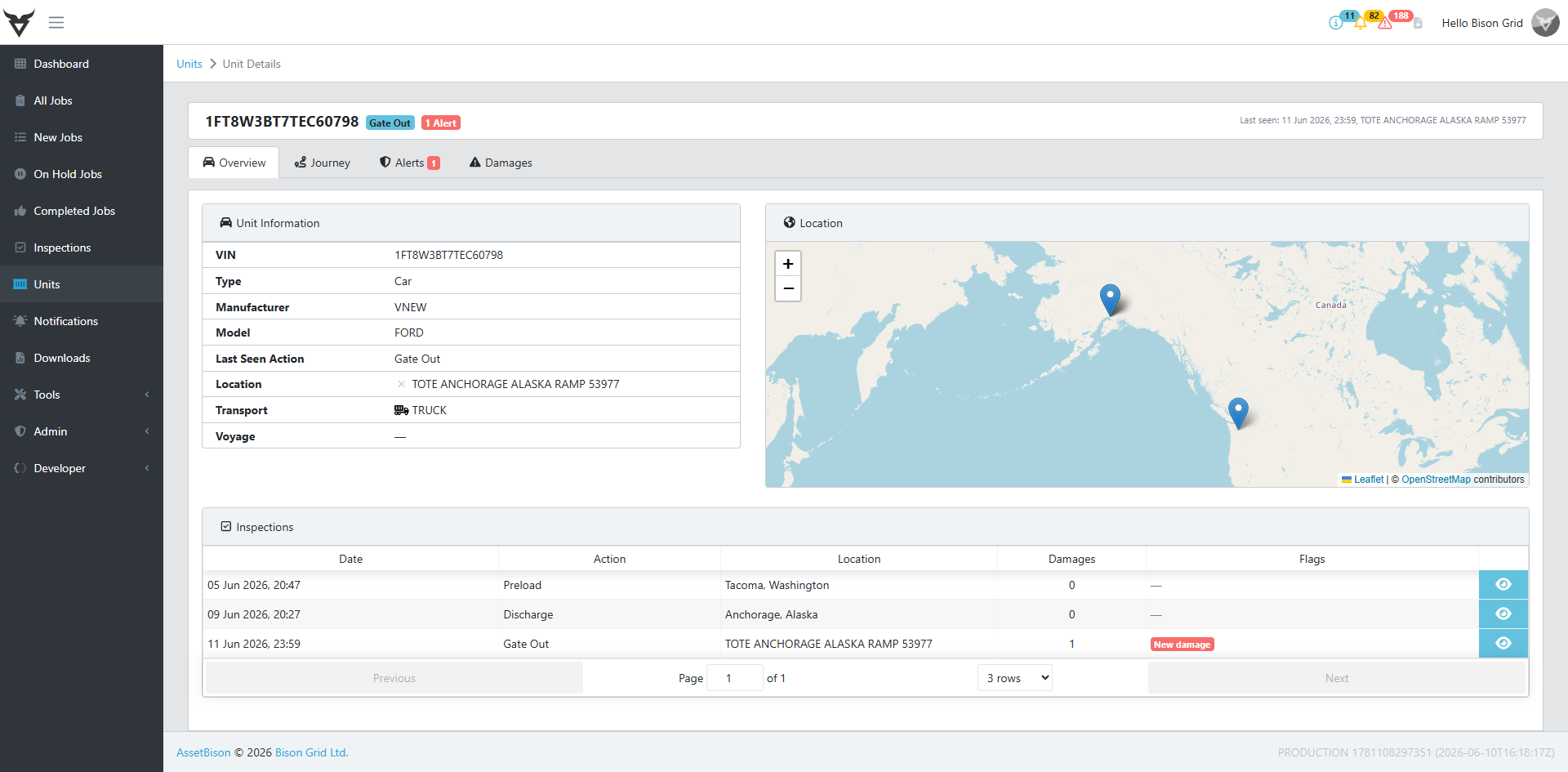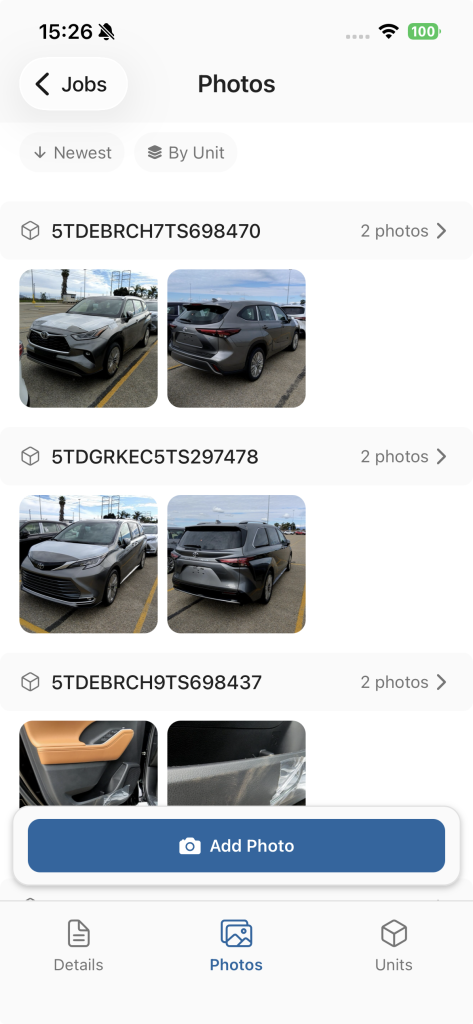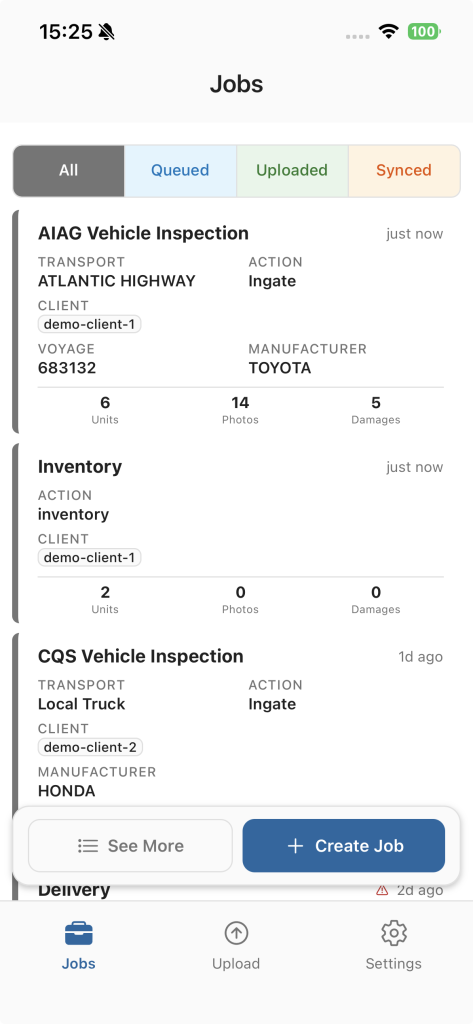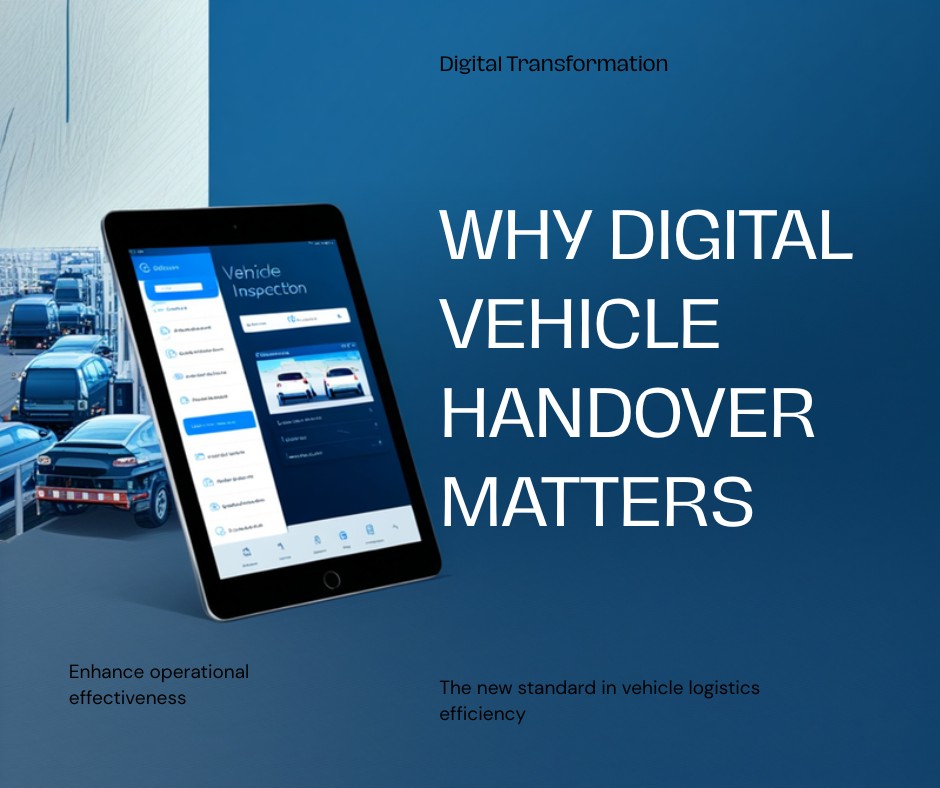
Digital vehicle handover in finished vehicle logistics - tablet showing inspection interface at a port

Why Digital Vehicle Handover Is Becoming the Industry Standard

·

For decades, vehicle handover documentation in finished vehicle logistics meant clipboards, carbon-copy forms, and damage reports that were difficult to verify after the fact. That era is ending — not because of a single technology breakthrough, but because the industry’s own standards bodies are formalising what digital-first operators have already proven works.

ECG, the Association of European Vehicle Logistics, has been driving standardisation in finished vehicle logistics since 1997. Their Quality Working Group — a platform of dialogue between OEMs, logistics service providers, and survey companies — has placed Digital Vehicle Handover at the centre of its current agenda. When the industry’s leading standards body makes digital handover a priority project, it signals something more significant than a trend: it signals a new baseline expectation.

The Standards Are Already Here

The foundation for digital vehicle handover has been building for years. The AIAG-ECG Global Vehicle Damage Codes Standard (M-22), now in its 6th edition, provides a standardised five-digit coding system for damage area, type, and severity — used by every major North American OEM and hundreds of vehicle inspectors worldwide. This isn’t a recommendation; it’s the only globally accepted standard for finished vehicle damage reporting.

Alongside the damage codes, ECG has published the Operations Quality Manual (OQM) for cars and light commercial vehicles — endorsed by 13 leading European car manufacturers and now included by some OEMs in their logistics tenders. The manual has been translated into multiple languages and is continuously updated, most recently adding dedicated chapters on alternative fuel vehicle handling and the transport of cars in containers.

These standards were designed for a digital world. The M-22 damage codes assume electronic transmission of claims data. The OQM’s quality benchmarks assume measurable, auditable processes. Paper-based operations can technically comply, but they do so at a significant disadvantage in speed, accuracy, and evidence quality.

Electric Vehicles Are Accelerating the Shift

The growing volume of battery electric vehicles moving through global supply chains has added urgency to the digital handover conversation. ECG’s Quality Working Group has made EV handling — particularly in maritime environments — an ongoing discussion topic, reflecting the operational complexity that EVs introduce at every handover point.

In January 2025, ECG held a joint meeting of its Quality and Maritime & Ports Working Groups in Zeebrugge, specifically to address overlapping topics including BEV transport, fires on board ships, and containerised vehicle movements. The European Maritime Safety Agency (EMSA) has published dedicated guidelines for alternative fuel vehicles, which ECG has actively promoted across its membership.

Meanwhile, AIAG released its M-26 Battery Electric Vehicle Supply Chain Handling Guideline, developed with volunteers from Honda, Ford, General Motors, Nissan, Stellantis, Toyota, and Volkswagen. This document addresses charging infrastructure, critical battery storage requirements, handling in extreme temperatures, and emergency response protocols — all of which need to be documented and verified at every handover point.

The implication is clear: EV logistics demands a level of condition documentation that paper processes simply cannot deliver at scale. Battery state of charge, thermal management status, and EV-specific damage categories all require structured digital capture with timestamps and location data.

Digital Consignment Notes: The Regulatory Push

The regulatory environment is moving in the same direction. The transition to electronic consignment notes (eCMR) is progressing across Europe, with EU Member States required to accept digital freight transport information from July 2027. ECG hosted a dedicated webinar on this topic in July 2025, bringing together experts from the European Commission, IRU, and logistics operators to explore the practical challenges.

While the EU hasn’t mandated paperless operations — creating what ECG describes as a period of uncertainty between ambition and ambiguity — the direction is unmistakable. Operators who have already digitised their handover documentation are positioned to meet eCMR requirements as they crystallise, while those still relying on paper face a growing compliance gap.

For vehicle logistics specifically, the eCMR transition reinforces the value of digital proof of delivery (ePOD) systems that capture GPS-stamped handover confirmations with photographic evidence and digital signatures. These aren’t just operational efficiencies — they’re the evidence chain that digital consignment frameworks will increasingly require.

What Digital Vehicle Handover Actually Requires

Standards bodies and regulatory frameworks set the direction, but implementation comes down to operational capability at the point of handover — on the quayside, at the compound gate, on the truck at delivery. A digital vehicle handover system needs to deliver several things simultaneously:

Structured damage documentation. Not just photos, but hierarchical photo capture enforced at job, unit, and damage levels — aligned with the AIAG-ECG damage coding standard so that every record is classifiable, searchable, and defensible.

Automatic metadata capture. GPS coordinates, timestamps, and device identification recorded automatically at the moment of inspection. This isn’t optional — it’s what makes digital evidence legally meaningful. A timestamped, GPS-tagged photo of a vehicle’s condition at a specific handover point is fundamentally different from a retrospective paper note.

Digital signatures. Legally binding sign-off at the point of handover, replacing wet signatures on paper forms. Both parties confirm condition, liability transfers clearly, and the record is immediately available — not sitting in a van glove box waiting for end-of-week processing.

Offline capability. The reality of vehicle logistics is that handovers happen in ports with no signal, on vessels at sea, and at remote compounds. Any system that depends on continuous connectivity will fail precisely when documentation matters most.

Speed that matches operational tempo. Surveyors and terminal operators process vehicles under time pressure — berth windows, shift patterns, and transport schedules don’t pause for data entry. Digital handover tools need to be faster than the paper they replace, not slower.

The Claims Defence Argument

For shipping lines and PCTC operators, the case for digital handover is ultimately a claims defence argument. When a damage dispute arises weeks or months after a handover, the operator with timestamped, GPS-tagged photographic evidence and a digital signature from the receiving party has a fundamentally stronger position than one relying on a paper form that may have been completed hours later from memory.

The ECG Quality Working Group’s focus on Visual Inspection Guidelines — published alongside their Operations Quality Manual — reflects this reality. Inspection quality at the point of handover directly determines claims outcomes downstream. Digital systems that enforce consistent capture standards (minimum photo counts, mandatory damage categorisation, required annotations) don’t just digitise the existing process — they raise the quality floor for every inspector on every shift.

Where the Industry Is Heading

The convergence is clear. Industry standards (AIAG-ECG damage codes, ECG Operations Quality Manual), regulatory frameworks (eCMR, EMSA alternative fuel guidelines), and operational pressures (EV volumes, multi-modal complexity, OEM compliance demands) are all pointing in the same direction: digital vehicle handover as the expected baseline, not the exception.

Operators who have already made this transition report tangible benefits in claims resolution speed, evidence quality, and operational throughput. Those who haven’t are increasingly finding that their OEM clients, insurance partners, and industry peers expect digital documentation as standard — because the standards bodies they all belong to are telling them it should be.

The question is no longer whether digital vehicle handover will become the norm. It’s whether your operation will be ready when your next client, contract renewal, or OEM tender assumes it already is.

About Bison Grid

Bison Grid’s quality management and ePOD platform is purpose-built for finished vehicle logistics — delivering mobile inspection, digital handover documentation, and claims-ready evidence across shipping, trucking, rail, and terminal operations. With over 1 million vehicles inspected across 4 continents, we help operators defend every claim and document every handover. Get in touch to see how it works.

Tim Fairchild

Written by

Tim Fairchild

Managing Director