Tim Fairchild


·
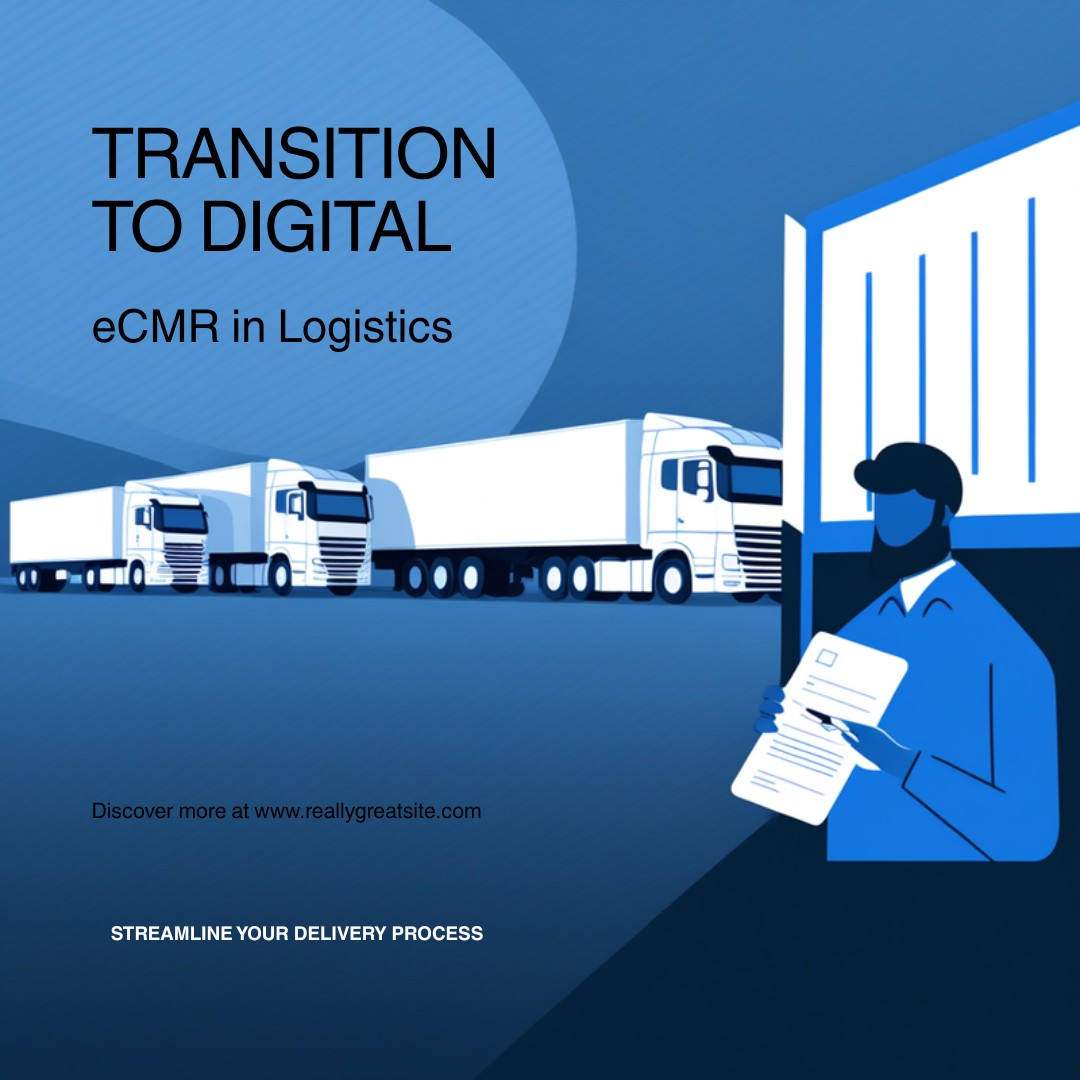
Paper consignment notes have governed international road freight in Europe since the 1956 CMR Convention. That is about to change. The EU’s electronic Freight Transport Information (eFTI) regulation will require all Member State authorities to accept digital transport documentation from 9 July 2027 — and the vehicle logistics industry needs to decide whether it’s going to lead the transition or scramble to catch up.
For finished vehicle logistics operators — truck carriers, terminal operators, and third-party logistics providers — this isn’t just a paperwork reform. It’s a fundamental shift in how handover evidence is created, stored, and shared. And for operators already running digital ePOD and inspection workflows, the transition is less a disruption than a validation of what they’ve already built.
The legal architecture has three layers that are converging simultaneously.
The eFTI Regulation (EU 2020/1056) establishes the framework for digital freight documentation across road, rail, inland waterway, and air transport. From January 2026, Member State authorities could start accepting data from certified eFTI platforms. From 9 July 2027, they must. This means any transport operator submitting freight information via a certified platform cannot be refused — authorities will be legally obligated to accept digital documentation.
The eCMR Protocol — the Additional Protocol to the CMR Convention adopted in 2008 — makes electronic consignment notes legally equivalent to paper. To date, 38 countries have ratified the protocol. Spain is considering making eCMR mandatory from 2026. Italy, the last major Western European country to join, ratified in 2024. The critical mass for cross-border adoption has been reached.
The implementing specifications — detailed technical requirements for eFTI platforms published in November 2025 — define how data must be structured, transmitted, and certified. These specifications cover audit trails, security requirements, and interoperability standards that platforms must meet to achieve eFTI certification.
The combined effect: by mid-2027, digital freight documentation will be a legal right across the EU. By 2029, industry observers expect paper CMRs to have effectively disappeared from European logistics corridors.
General freight has one consignment note per shipment. Vehicle logistics has a handover event for every individual vehicle at every transfer point. A single car carrier delivering 10 vehicles to a terminal generates 10 proof-of-delivery records, each requiring condition documentation, signatures, and timestamped evidence of the handover. Multiply that across a fleet operation handling hundreds of vehicles per week, and the scale of the documentation challenge becomes clear.
Paper-based handover in vehicle logistics doesn’t just mean slower processing. It means condition records that are difficult to retrieve, liability evidence that degrades with time, and claims disputes that become word-against-word arguments because the documentation wasn’t structured for retrieval.
The eCMR transition reinforces something the vehicle logistics industry has been moving toward independently: digital proof of delivery with photographic evidence, GPS coordinates, timestamps, and digital signatures. The regulation doesn’t create the need — it formalises the standard.
ECG, the Association of European Vehicle Logistics, hosted a dedicated webinar on eCMR adoption in July 2025, bringing together experts from the European Commission’s DG MOVE, the International Road Transport Union (IRU), and logistics operators including MOSOLF and technology providers Transfollow and Shippeo.
The webinar surfaced a reality that operators need to plan around: while the regulatory direction is unmistakable, the practical rollout remains uneven. The EU hasn’t mandated going paperless — it has mandated that authorities must accept digital documentation. The difference matters. During the transition period, operators may need to support both paper and digital workflows simultaneously, depending on which countries and counterparties they’re working with.
The Benelux countries have been running an eCMR pilot since 2017, recently extended to July 2027 to align with the eFTI mandate. This gives operators in Belgium, the Netherlands, and Luxembourg — including the port of Zeebrugge, the primary transit hub for vehicle imports into Europe — a well-established digital documentation environment to operate within.
For vehicle logistics specifically, the Benelux experience is instructive. Operators who adopted digital handover documentation within the pilot framework report faster invoicing, clearer liability boundaries, and stronger evidence for claims resolution. The eCMR didn’t just replace paper — it improved the quality of the underlying process.
Here’s what makes this transition particularly relevant for vehicle logistics operators who are already running digital workflows: electronic proof of delivery (ePOD) systems capture exactly the data that eCMR and eFTI frameworks require.
A well-implemented ePOD workflow in vehicle logistics already produces GPS-stamped delivery confirmations with photographic evidence and digital signatures at the point of handover. It already creates structured, timestamped records linked to VIN-level data. It already generates the chain of custody documentation that eFTI platforms will need to transmit to authorities on inspection request.
The operators who will find the eCMR transition easiest are those who have already digitised their handover documentation — not because they were preparing for eFTI specifically, but because digital evidence produces better operational outcomes. Faster invoicing. Stronger claims defence. Clearer liability at every handover point.
For these operators, eCMR compliance becomes a certification and platform question — ensuring their existing digital workflows can output data in eFTI-compliant formats — rather than a process transformation.
The European Commission estimates that digital freight documentation could eliminate approximately 160 million sheets of paper per year across the EU. The environmental argument is clear, but the operational argument is sharper.
Operators still running paper-based handover face three converging pressures. First, the regulatory timeline: authorities must accept digital from July 2027, and industry adoption is expected to accelerate through 2026. Second, commercial pressure: OEM clients, shipping lines, and insurance partners are increasingly requiring digital condition records as standard. Third, competitive pressure: operators with digital ePOD can invoice faster, resolve claims more effectively, and demonstrate compliance capability that paper-based competitors cannot match.
The practical steps for operators preparing now are straightforward. Train drivers and field inspectors on digital signature capture. Ensure your handover documentation produces structured, timestamped records with GPS coordinates and photographic evidence. Select tools that can integrate with eFTI-certified platforms as they become available. And critically, start building the digital evidence chain now — don’t wait until July 2027 to discover that your documentation workflow needs rebuilding.
The eCMR transition is one part of a broader digitalisation wave in finished vehicle logistics. ECG’s Quality Working Group has placed Digital Vehicle Handover as a current priority project. AIAG and ECG’s Global Vehicle Damage Codes Standard (M-22) assumes electronic transmission. The EMSA guidelines for alternative fuel vehicles require structured digital documentation. The EU Battery Passport regulation demands VIN-level digital traceability.
Each of these initiatives reinforces the same direction: paper is leaving vehicle logistics, and the operators who have already built digital evidence chains are the ones best positioned — not just for eCMR compliance, but for every compliance and commercial requirement that follows.
The question for operators in 2026 isn’t whether to go digital. It’s whether the digital workflows they have (or are building) will produce documentation that meets the standard the industry is converging on: structured, timestamped, GPS-tagged, photographically evidenced, digitally signed, and retrievable at VIN level.
That’s not a regulatory requirement. It’s the operational baseline that eCMR, eFTI, and the commercial expectations of OEMs and insurers are collectively defining.
Bison Grid’s ePOD and quality management platform delivers GPS-stamped digital handover documentation with photographic evidence and digital signatures — the evidence chain that eCMR frameworks are formalising as standard. Purpose-built for finished vehicle logistics across shipping, trucking, rail, and terminal operations. Over 1 million vehicles inspected across 4 continents. Get in touch to see how it works.